
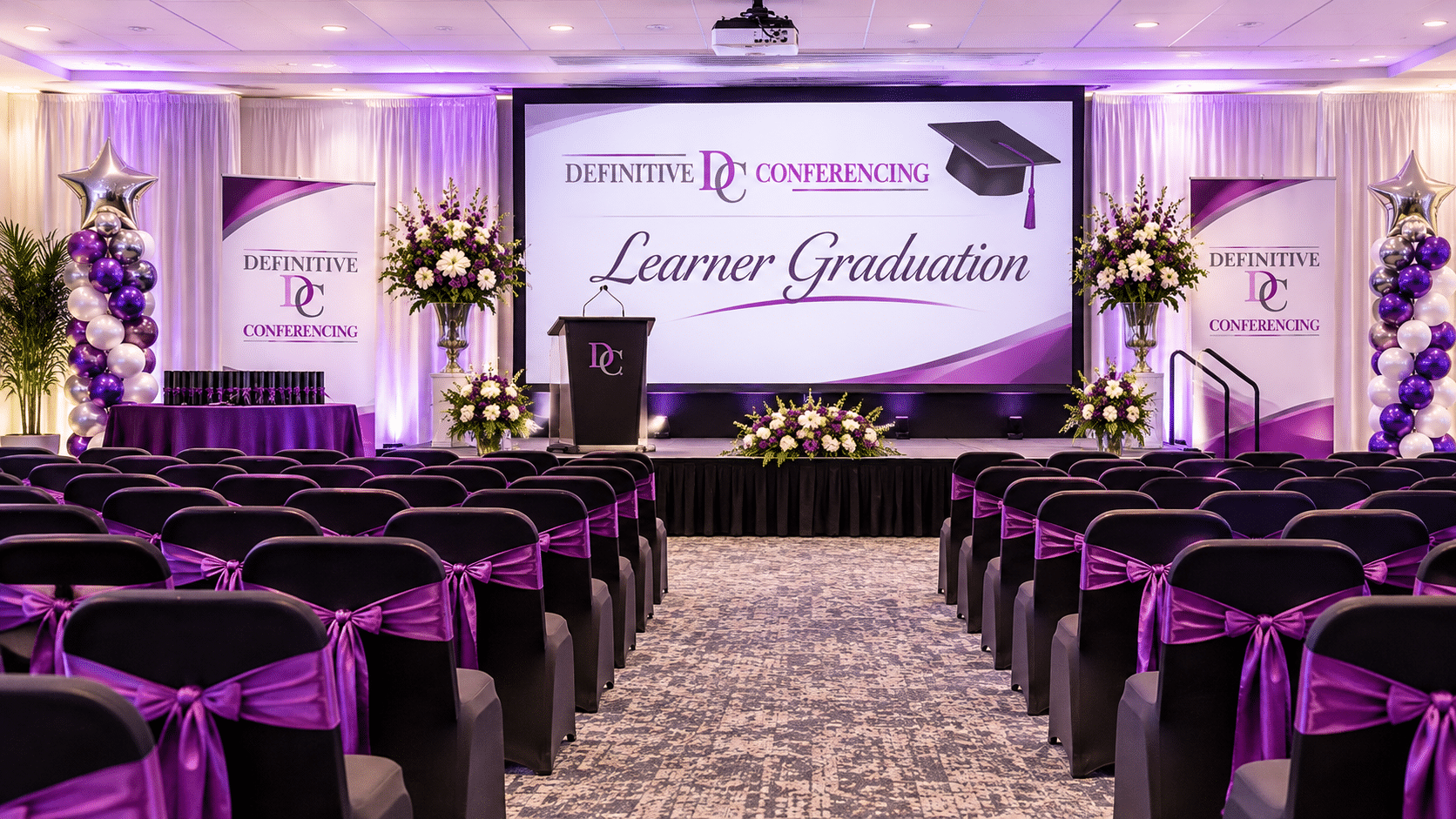
How to Plan a Learnership Graduation Ceremony
After months of blocks, assessments and portfolios of evidence, your learners have made it. Now they deserve a proper moment in front of their families and employers. This guide to graduation ceremony planning covers the date, guest numbers, the programme, sound, photos and lunch, with a sample running order and a checklist you can copy. If you’d like to talk dates while you read, our events page shows how we host celebrations.
In short: good graduation ceremony planning starts with a date that works for graduates, employers and families, and a realistic guest count (usually two guests per graduate, plus employers, staff and speakers). Keep the ceremony to about 90 minutes, with short speeches, a smooth certificate handover and time for photos. Book a venue with a sound system and microphones, easy parking and step-free access, and plan lunch afterwards so families can celebrate together.
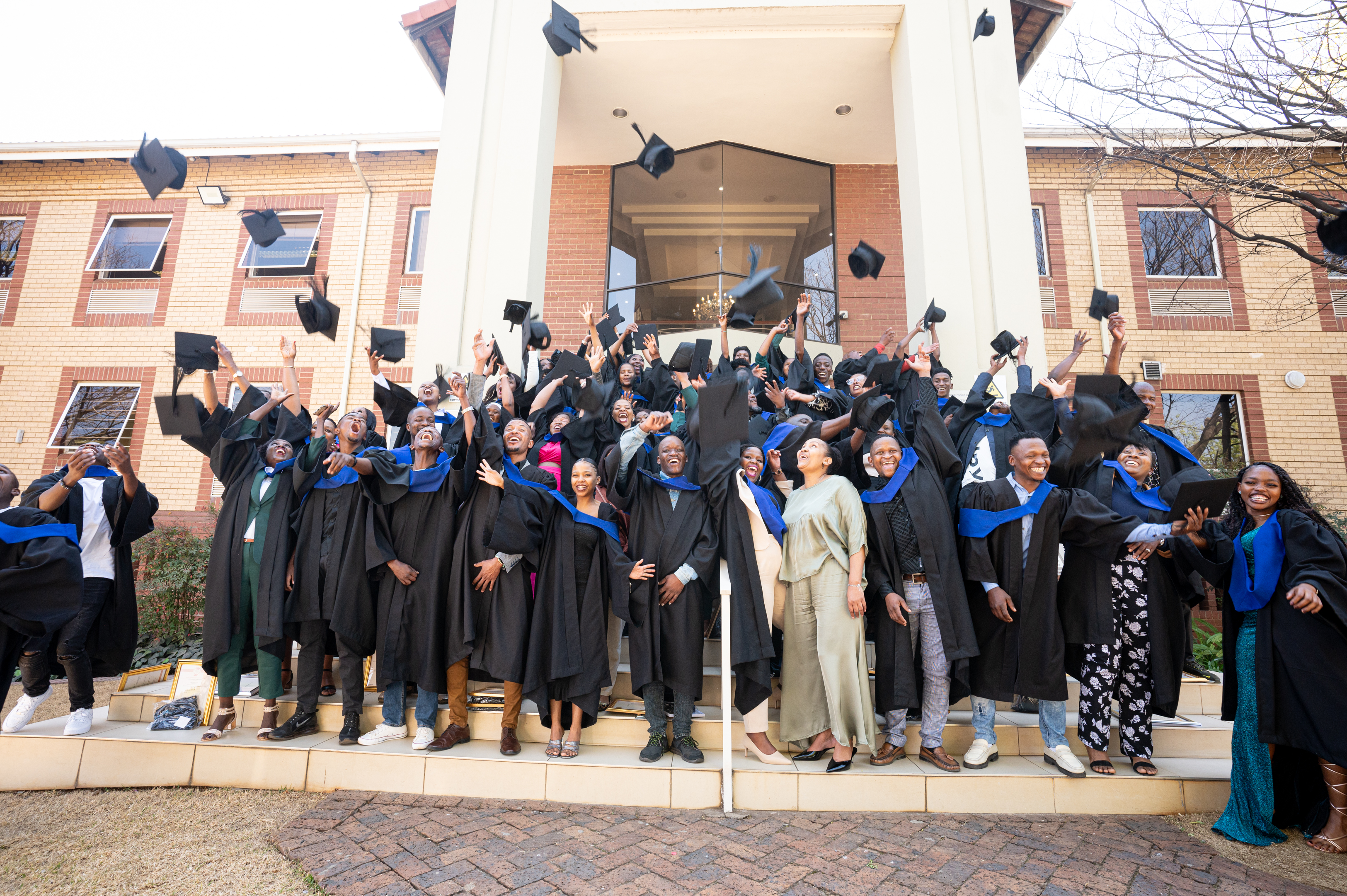
1. Graduation ceremony planning starts with the date
Pick your date once you know which learners have been found competent and when their certificates or results letters will be ready. Then check it with:
- Employers and sponsors, who usually want to attend and often want to speak.
- Graduates, who need time to arrange leave and transport for their families.
- Your venue, because popular months book up quickly.
Weekday mornings suit employers. Saturdays suit families. If you can only please one group, choose the families. They will be the ones cheering loudest.
2. Count your guests properly
Guest numbers are where graduation ceremony planning usually goes off track, because guest numbers grow. Every graduate has a proud parent, a partner, a child, and an aunt who was not on the list but is definitely coming. Set a clear number of guests per graduate on the invitation, then add everyone else.
Worked example (for illustration only):
| Who | Example count |
|---|---|
| Graduates | 30 |
| Two guests per graduate | 60 |
| Employer and host company guests | 10 |
| Facilitators, assessors and provider staff | 8 |
| Speakers and VIPs | 4 |
| Total guests | 112 |
Build in a small buffer for extra guests, and make sure the room seats your total in theatre style, with rows facing the stage.
3. Plan the programme
The running order is the heart of graduation ceremony planning. A good ceremony feels special without dragging on. Aim for about 90 minutes from welcome to photos. Ask each speaker to keep to five or ten minutes (and then ask again). Here is a sample running order:
| Time | What happens |
|---|---|
| 09:30 | Guests arrive, register and find their seats |
| 10:00 | Welcome and housekeeping from the programme director |
| 10:10 | Speech from the training provider |
| 10:20 | Speech from the employer or sponsor |
| 10:30 | Learner speech or vote of thanks |
| 10:40 | Certificate handover, one graduate at a time |
| 11:30 | Group photos and family photos |
| 12:00 | Lunch and celebration |
Appoint a programme director who keeps things moving, introduces each speaker and reads the graduates’ names. Give them a printed list with the correct pronunciation of every name. It is a small thing that means a great deal to families.
4. Sound, stage and photos
Sound is the part of graduation ceremony planning that people forget until the first speaker taps the microphone. Plan for:
- Sound: with 100 people in the room, a PA system and microphones are a must. Test them before guests arrive.
- Stage area: keep a clear space at the front for the certificate handover, with a table for the certificates in the order they will be called.
- Podium: useful for speakers who like notes. Ask the venue if one can be arranged.
- Photos: book a photographer, or at least ask someone to take a photo of every graduate receiving a certificate. Families will ask for these for years.
- Backdrop: a simple branded banner behind the stage makes every photo look official.
5. Lunch and the celebration
Lunch after the ceremony turns a formal event into a celebration. Families get to meet facilitators, employers get to meet families, and graduates get a few moments to enjoy it all.
- Seat guests at round tables, usually 8 per table, so families can sit together.
- Collect dietary requirements with your RSVPs.
- Plan a cake if you would like one, and check the venue policy on bringing your own cake and decorations.
- Keep a table near the front for speakers, sponsors and VIPs.
6. Put guests first in your graduation ceremony planning
Many graduation guests have never been to your venue before, and some will be travelling with older family members or small children. Make it easy for them:
- Send the full address, a map, the start time and parking details with the invitation.
- Check how many cars the parking can take, and whether it is secure.
- Ask about step-free access, accessible toilets and which floor the ceremony room is on.
- Put up clear signs from the parking area to the ceremony room.
- For families travelling from far away, suggest hotels within walking distance of the venue.
7. Who does what in graduation ceremony planning
Share this checklist with your team, the employer and the venue, so everyone knows their part:
| Task | Done by |
|---|---|
| Confirm the final list of graduates | Training provider |
| Book the venue, ceremony room and lunch | Training provider or employer |
| Send invitations with the address, start time and parking details | Training provider |
| Collect guest numbers and dietary requirements | Training provider |
| Prepare certificates and check every name | Training provider |
| Brief the programme director and speakers | Training provider |
| Book the photographer | Training provider or employer |
| Confirm sound, microphones and the room layout | Venue |
| Set up the lunch and seating plan | Venue |
Graduation ceremony planning checklist: the quick recap
If you are short on time, this is graduation ceremony planning in one list:
- set a date that works for graduates, employers and families
- count guests realistically, with a small buffer
- keep the ceremony to about 90 minutes, with short speeches
- book sound, microphones and a photographer
- plan lunch afterwards so families can celebrate together
- send clear directions and parking details with the invitation
Running a learnership group from first block to graduation? Our learnership logistics guide covers the months before the big day.
How Definitive helps with graduation ceremony planning
Definitive Conferencing is a dedicated conference, training and events venue in Isando, just off the Barbara Road off-ramp, about 10 minutes from OR Tambo. If your learners trained with us, they already know the way, and so does your team.
- Ceremony: up to 120 guests theatre style.
- Lunch: lunch afterwards at round tables of 8. [CONFIRM: how many guests can be seated for lunch after a 120-guest ceremony]
- Sound: a PA system and 2 roving mics are included for bigger bookings. A podium and extra microphones can be hired in on request.
- Extras on request: recommended photographers and our in-house DJ, Noxx of Born Free Productions.
- Your touches: you are welcome to bring your own cake and décor, subject to our terms and conditions.
- Parking: secure parking for 85 cars on site, plus 40 at Road Lodge next door.
- Access: ramp access, disability parking and an accessible toilet. Our conference rooms are on the first floor, and our dining room can be set up for up to 80 guests.
- Families from far away: Road Lodge Airport and Town Lodge Airport are a 2-minute walk away, and City Lodge Barbara Road is 400 m away.
- Price: [CONFIRM: graduation package price]
Frequently asked questions
How long should a graduation ceremony be?
Aim for about 90 minutes from the welcome to the end of photos, then lunch. That leaves time for three or four short speeches and a certificate handover without guests getting restless. For large groups, allow about one minute per graduate for the handover, and keep speeches to five or ten minutes each.
Who should speak at a learnership graduation?
Most ceremonies include the training provider, the employer or sponsor, and a learner who gives a speech or vote of thanks. A programme director ties it together. Keep it to three or four speakers and agree time limits in advance, so the graduates stay the focus of the day.
How many guests should each graduate invite?
Two guests per graduate is a common and manageable number. Put the number clearly on the invitation and ask for RSVPs with names and dietary requirements. Then add employers, staff, speakers and a small buffer for extra family members, and check the total fits the room in theatre style.
What should go on the graduation programme?
Include the date, venue and running order, the names of the speakers, and the full list of graduates in the order they will be called. Many providers add the qualification name and a thank-you to the employers and sponsors. A printed programme also makes a keepsake families like to take home.
Do we need a photographer at a graduation?
A photographer is worth it if your budget allows, because families treasure the photo of their graduate receiving a certificate. If not, ask one person to photograph every handover from the same spot, and set up a branded backdrop for group and family photos after the ceremony.
Ready to plan your graduation?
Your learners did the hard work. Let us take care of the rest of your graduation ceremony planning, from the chairs to the cake table. To check dates or see the rooms, talk to us on +27 11 392 5580 or tarryn@defincon.co.za, or visit our events page.
Share this article
Follow us
A quick overview of the topics covered in this article.
Latest articles
November 27, 2026
November 27, 2026
November 27, 2026