
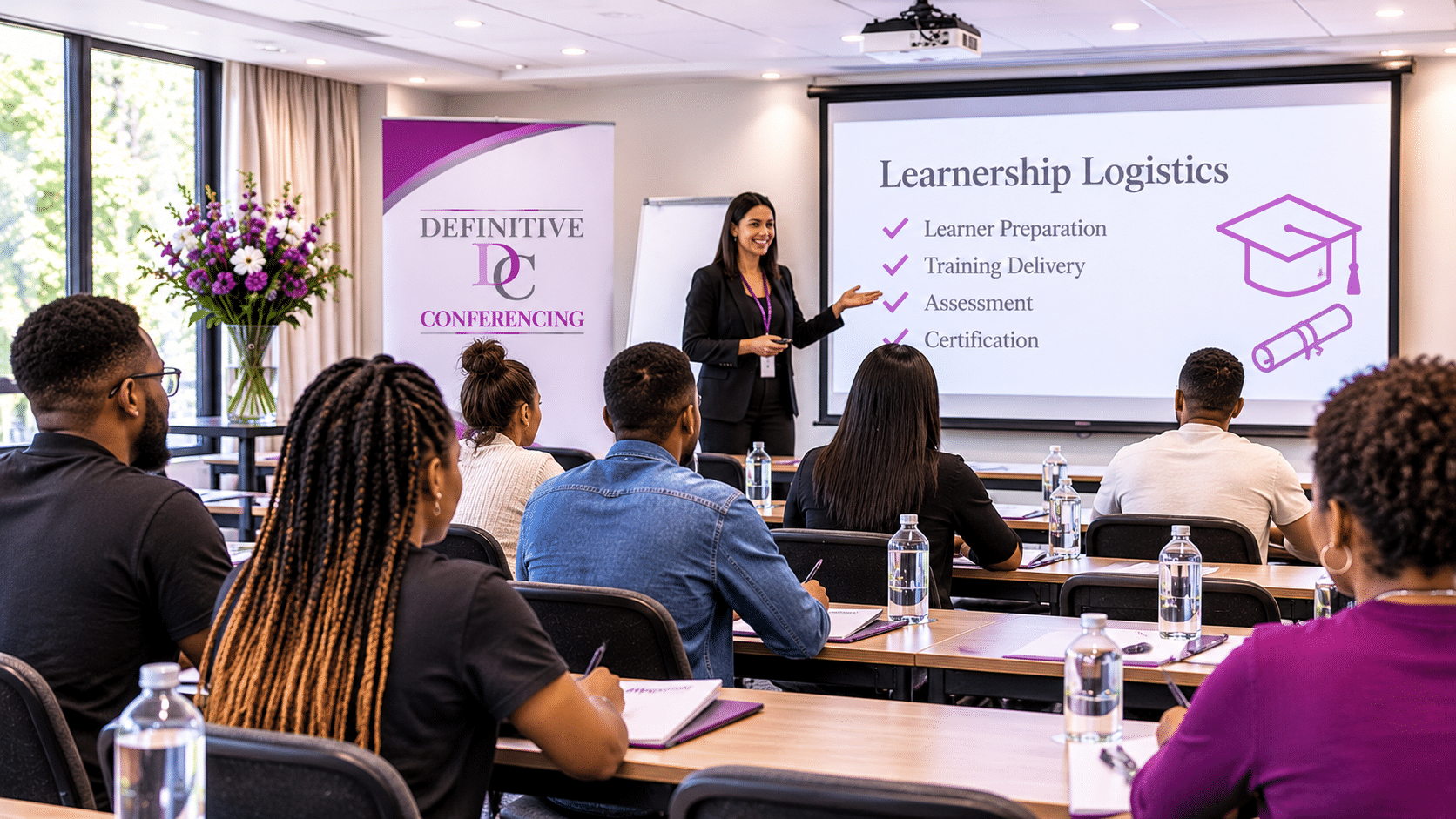
Learnership Logistics: A Guide for Training Providers
Running a learnership is a bit like planning a wedding that lasts twelve months: lots of people, lots of paperwork, and everyone expects lunch. The training is the easy part for most providers. It’s the learnership logistics that eat your week: dates, rooms, transport, catering, registers and files. This guide walks you through each one, with a planning timeline and a worked budget. If you’d like to see how we host learnership groups, our training venue page has the details.
In short: a learnership combines structured learning with practical work experience and leads to a registered qualification. It runs under an agreement between the learner, the employer and an accredited training provider, registered with the relevant SETA. Good learnership logistics means agreeing block dates with employers early, booking the same suitable room for every block, sorting transport and meals, and keeping attendance registers and learner records up to date from day one.
[IMAGE: insert a training room photo from the media library here, with this alt text: Learnership logistics: learners in a classroom-style training room at Definitive Conferencing in Isando]The basics that shape your learnership logistics
Three parties sign a learnership agreement: the learner, the employer and the training provider. The employer submits the signed agreement to the SETA for registration. That matters for logistics because you are coordinating with at least two other parties, and often several host employers at once.
A learnership has two parts:
- Structured learning: the theory and practical sessions you run, usually in blocks at a training venue.
- Workplace experience: time at the employer, doing the job under supervision.
Learners have to attend the study periods and theory sessions with the provider, so every block date needs the employer to release them. The provider also has to record, monitor and keep details of the training it delivers, and discuss progress with the learner and employer. Plan your systems around both of those from the start.
Plan your learnership logistics around employer dates
The first rule of learnership logistics is simple: your training calendar only works if employers can spare their learners on those dates. Agree the full block schedule with every host employer before you book anything else, and avoid their busiest weeks (month-end in a finance team, stock-take in retail, and so on).
Here is a simple timeline to work from:
| When | What to sort out |
|---|---|
| 3 months before the first block | Confirm block dates with every host employer, book the venue for all blocks, and agree how learners will get there |
| 6 weeks before | Confirm learner numbers, dietary needs and any accessibility needs. Book any extra equipment |
| 2 weeks before | Send learners joining instructions: address, start time, parking, what to bring and who to call |
| Day before | Print attendance registers, prepare learner files and check the room layout with the venue |
| Every block day | Signed registers in the morning and after lunch, a quick check-in with the venue team and safe storage for files |
| After each block | File registers and assessment evidence, update learner records and share progress with employers |
Book a room that works for weeks, not hours
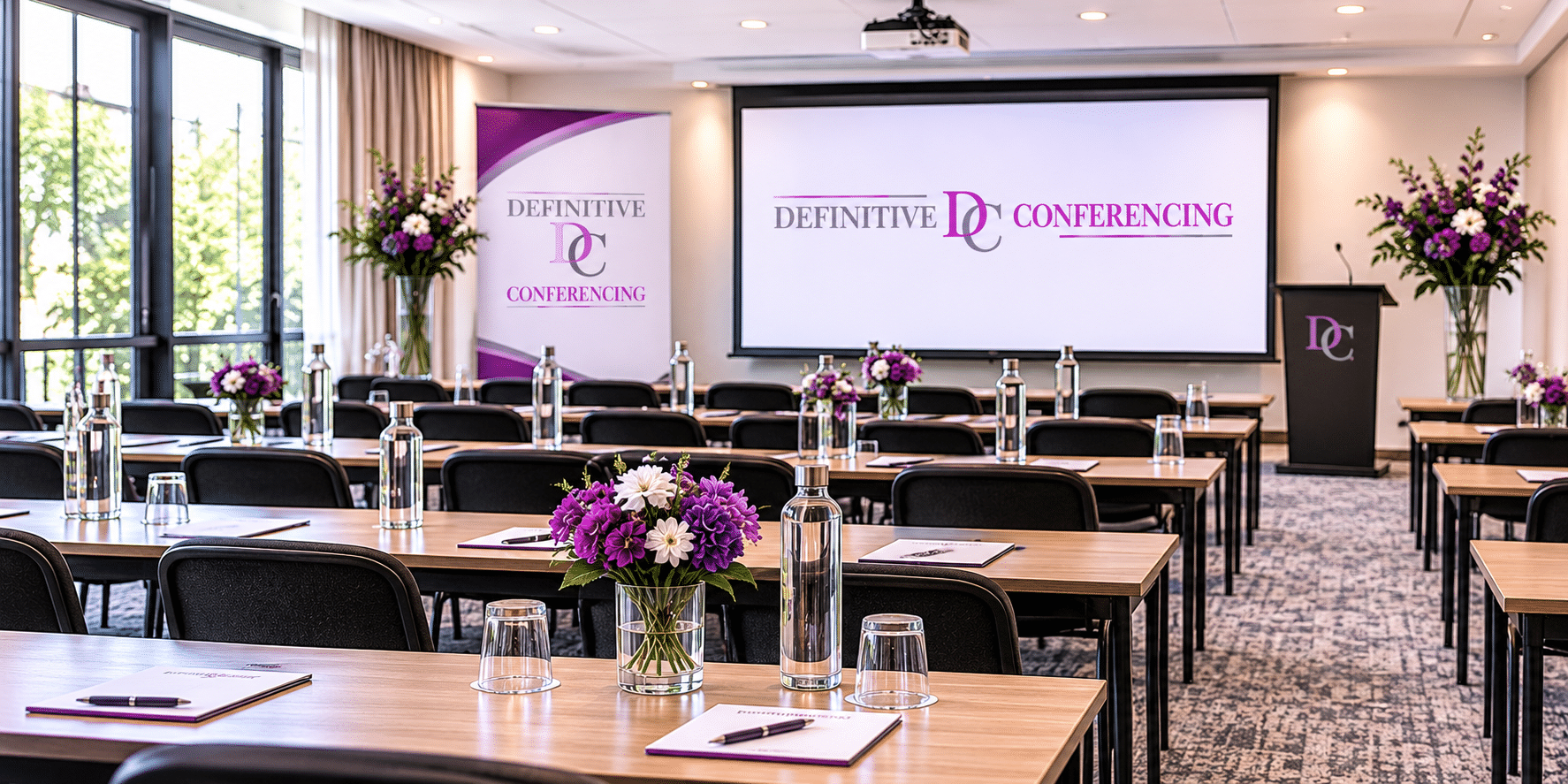
A learnership group spends many days in the same room, so small annoyances add up. Good learnership logistics starts with a room you won’t have to think about. Look for:
- The same room for every block, so learners know where to go and your setup stays consistent.
- Classroom layout with space to write, because workbooks and assessments need table space.
- A second, smaller room for assessments, moderation or learners who need extra support.
- Reliable Wi-Fi and backup power, especially if you use an online learner management system.
- Secure premises, so laptops and learner files are safe over lunch.
If your programme is quality assured by the QCTO, the venue also becomes part of your accreditation. Our guide to QCTO site requirements explains what you need from the venue, and our guide on how to choose a training venue has a site visit checklist.
Getting learners there: transport and learnership logistics
Attendance is everything in a learnership, and the commute is where it often goes wrong. Many learners rely on public transport or lifts, so:
- choose a venue close to main roads and easy to explain in one sentence
- set a start time that works with real travel times, not ideal ones
- send a map, the full address and a contact number before the first block
- check parking for facilitators, assessors and any learners who drive
- for learners from out of town, look for accommodation within walking distance of the venue
A learner who arrives calm at 08:30 learns more than one who sprinted in at 09:15.
Feed people properly
Hungry learners are quiet learners, and not in the good way. Agree with the employer who pays for meals, then build tea breaks and lunch into the daily cost. Collect dietary requirements before the first block, and ask the venue how they handle them. A proper lunch also keeps the group on site, so the afternoon session starts on time.
Keep the paperwork moving
Paperwork is the part of learnership logistics that catches up with you at verification time. Good records protect you, the employer and the learner. On every block day:
- have attendance registers signed in the morning and after lunch
- keep learner files and portfolios of evidence in one place, stored securely
- schedule assessments early in the block, so there is time for anyone who needs another attempt
- note any absence and follow it up with the employer the same day
After each block, file everything and update your learner records while the details are fresh. Future you, preparing for a verification visit, will be very grateful.
Worked example: budgeting your learnership logistics
This is an example only, to show how the numbers add up. Check what any day rate includes before you budget.
| Item | Example figure |
|---|---|
| Learners per block | 25 |
| Days per block | 5 |
| Example day rate | R220pp per day excl. VAT |
| Venue cost per block | 25 x R220 x 5 = R27,500 excl. VAT |
| Venue cost for 4 blocks | R110,000 excl. VAT |
Add any extras the venue charges for, and agree with the employer which costs sit in the learnership budget and which are covered elsewhere.
Learnership logistics checklist: the quick recap
If your learnership logistics are in place before the first block, the rest of the year gets much easier. Before you start, make sure you have:
- block dates agreed with every host employer
- the same suitable room booked for every block
- a transport plan and joining instructions sent to learners
- meals agreed and dietary requirements collected
- attendance registers, learner files and secure storage ready
- a budget per block, with extras agreed in advance
- a date pencilled in for the graduation
Finish with a celebration
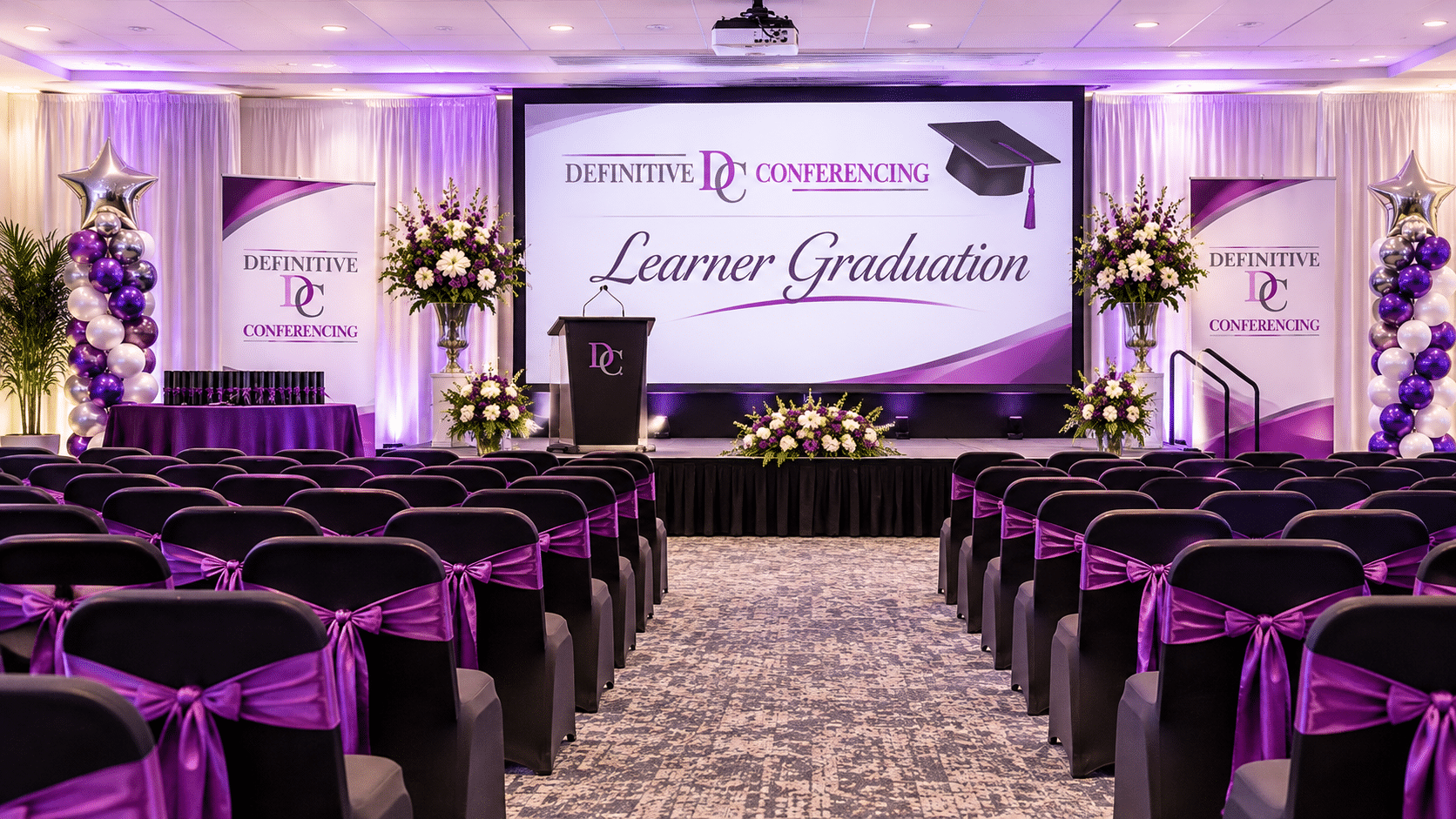
Learners who complete a learnership have earned a proper send-off, and a graduation ceremony gives employers, families and learners a moment to be proud. Book it with your venue early, especially if it falls in a busy month, and plan lunch after the ceremony. Families tend to bring more people than the invitation says, so build in a little room.
How Definitive helps with learnership logistics
Definitive Conferencing is a dedicated conference and training venue in Isando, just off the Barbara Road off-ramp, about 10 minutes from OR Tambo. We are an approved QCTO training site for accredited providers who train here, and we have hosted training providers for 14 years.
- Rooms for every group: four conference rooms seating 30 to 63 classroom style, two of which combine for up to 120, plus boardrooms for 6 to 12 for assessments and moderation.
- In every room: a ceiling-mounted data projector, a pull-down screen and a flip chart with paper and pens.
- Connectivity and power: a 500 Mbps fibre line and a full three-phase generator.
- Security: access control, CCTV and secure parking for 85 cars on site, plus 40 at Road Lodge next door.
- Meals: a served conference lunch in our dining room, with buffet set-ups available.
- Out-of-town learners: Road Lodge Airport and Town Lodge Airport are a 2-minute walk away, and City Lodge Barbara Road is 400 m away.
- Graduations: ceremonies for up to 120 guests theatre style, with lunch afterwards at round tables. [CONFIRM: graduation package price]
- Rates: rates start from R220pp per day excl. VAT. [CONFIRM: what the R220pp day rate includes]
Here is how many learners each room seats:
| Room | Classroom | U-shape |
|---|---|---|
| Conference Room 1 | 63 | 40 |
| Conference Room 2 | 42 | 34 |
| Conference Rooms 1 and 2 | 120 | 72 |
| Conference Room 3 | 45 | 20 |
| Conference Room 4 | 30 | 30 |
| Conference Rooms 3 and 4 | 85 | 60 |
| Boardroom 5 | 14 | 10 |
| Boardrooms 6 and 7 | 18 | 12 |
Frequently asked questions
Who signs a learnership agreement?
Three parties sign a learnership agreement: the learner, the employer and the training provider. The employer then submits the signed agreement to the relevant SETA for registration. Where several employers or providers are involved, one is named as the lead, so it helps to agree early who coordinates dates and logistics.
How should we schedule the theory blocks?
Agree the full block schedule with every host employer before you book the venue, and avoid their busiest periods. Booking all blocks at once usually secures the same room each time, which keeps learners settled. Send joining instructions at least two weeks before the first block so learners can plan their travel.
What records should a provider keep during a learnership?
Keep signed attendance registers, learner files and portfolios of evidence, assessment results and notes of any absences or support given. The provider has to record, monitor and keep details of the training it delivers, and discuss progress with the learner and employer, so update records after every block.
Should learners get lunch during theory blocks?
It depends on what you agree with the employer and what your budget covers, but providing lunch makes a real difference. Learners concentrate better, the afternoon starts on time and nobody leaves the venue in search of food. Collect dietary requirements before the first block so the venue can plan.
Can we hold the graduation at the same venue?
Yes, and it is often the easiest option, because learners already know the way and the venue knows your group. At Definitive, graduation ceremonies seat up to 120 guests theatre style, with lunch afterwards at round tables. Book early if your graduation falls in a busy month.
Ready to plan your next learnership?
We can’t do the assessments for you, but we can make your learnership logistics a lot easier. To check dates for your blocks or see the rooms, talk to us on +27 11 392 5580 or tarryn@defincon.co.za, or see what we offer trainers on our training venue page.
Share this article
Follow us
A quick overview of the topics covered in this article.
Latest articles
November 26, 2026
November 26, 2026
November 26, 2026